


KAKEZAN 2026: A Week of AI, Innovation and Connected Mobility at Woven City
KAKEZAN 2026 felt like an inflection point. For some time now, we’ve been shaping a view of the future together with Toyota. One where people, mobility technologies and infrastructure are connected in a way that can help realize zero traffic accidents and enhance well-being for all.
At this first KAKEZAN event, our flagship technology showcase and gathering, what stood out was how parts of that vision are starting to show up in the real world step-by-step.
Over five days in early April 2026, we brought together colleagues, collaborators and guests from Japan and abroad at the newly opened Inventor Garage at Woven City in Shizuoka, Japan, under the theme “Heritage × Innovation.”
What we saw wasn’t just people walking through exhibits, but dialogue and people building on one another's thinking. People asking questions, challenging assumptions, and digging into how things work today, and how they could work even better tomorrow.
That steady back-and-forth created a certain atmosphere that is difficult to put into words, but seems to emerge naturally in a place like the Inventor Garage, precisely because of its ever-unfinished nature and long, respected history.
Sitting on the former stamping facility of Toyota Motor East Japan’s Higashi-Fuji Plant, the Inventor Garage was once focused on manufacturing at scale. Today, it’s a place where Inventors can explore the art of the possible — building, testing, learning and continuously improving their ideas.
But why did we hold this event in the first place? Not simply to introduce new technologies.
Kakezan: How we’re approaching the next 100 years
As Toyota Industries Corp., the origin of the Toyota Group, marks its 100th anniversary, its focus has continued to evolve; from looms, to cars and now to mobility more broadly.
But one thing hasn’t really changed. The idea of driving change “For Others.”
Hajime Kumabe, CEO, spoke to this in his keynote:
“When I reflect on what has sustained Toyota through the past 100 years, I do not think it was technology or capital alone. I think, at its heart, it was the simple desire to help others. To innovate, “For Others”... We will build the future in ways that are faster, bolder and different from what came before, but always rooted in that core philosophy.”
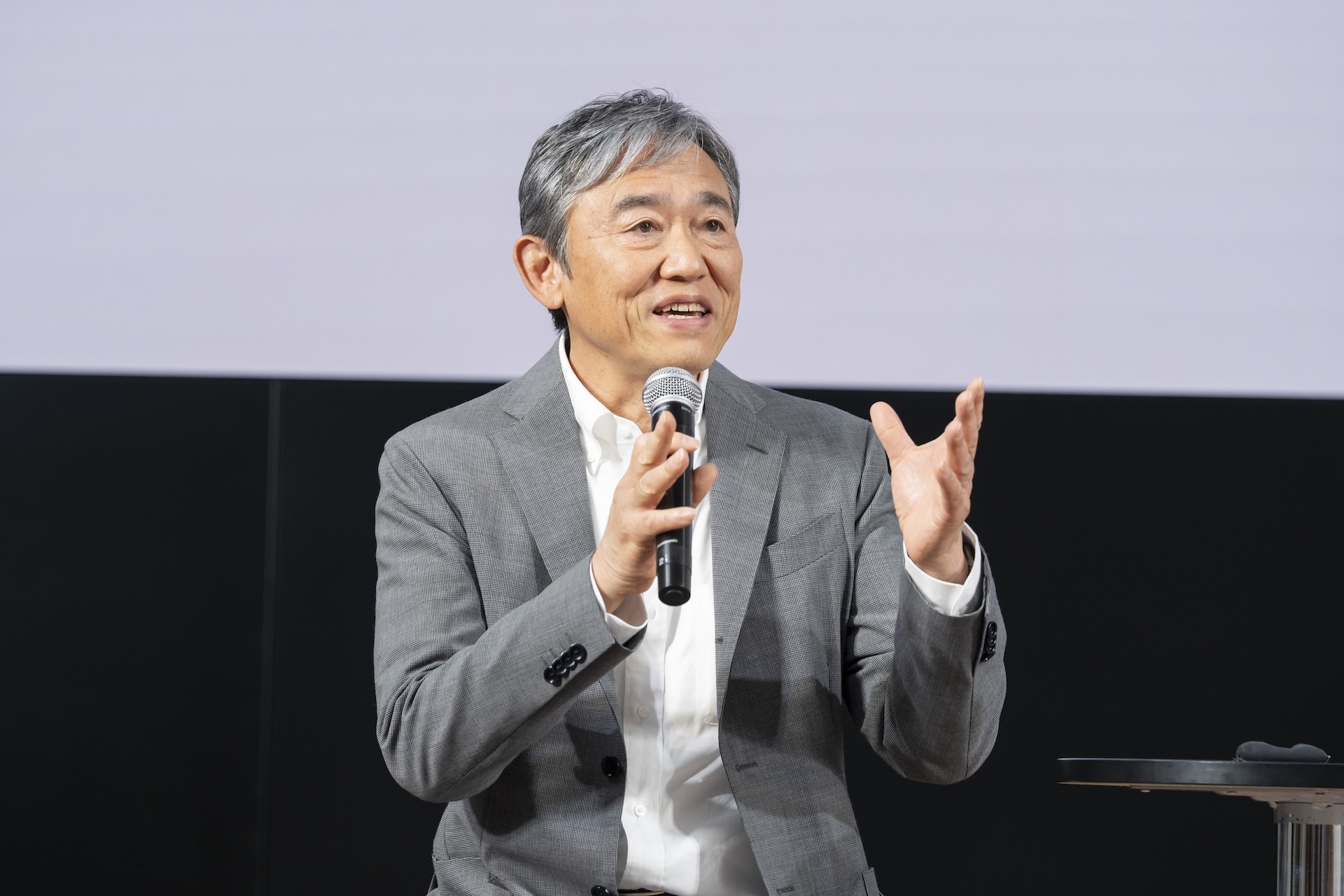
KAKEZAN 2026, then, was an opportunity to show how experts, teams and companies across industries can come together to co-create technologies that bring that philosophy to life. Technologies that will help shape Toyota’s next 100 years and, most importantly, empower people.
Daisuke Toyoda, SVP and Head of Woven City, built on this by acknowledging both the legacy of the site and the people who have chosen to step into this space and the unknown. He spoke about his determination to ensure Woven City stays true to being “a city where failure doesn’t stop progress”, continually helping shape the future.
“This site was once a factory of Toyota Motor East Japan, where 7,000 total people worked, producing 7.52 million vehicles over 53 years. There is a deep spirit of monozukuri*1 here. What we are doing now is taking the strength Toyota has built over time — not just in cars, but beyond — and expanding it to the scale of a city.”
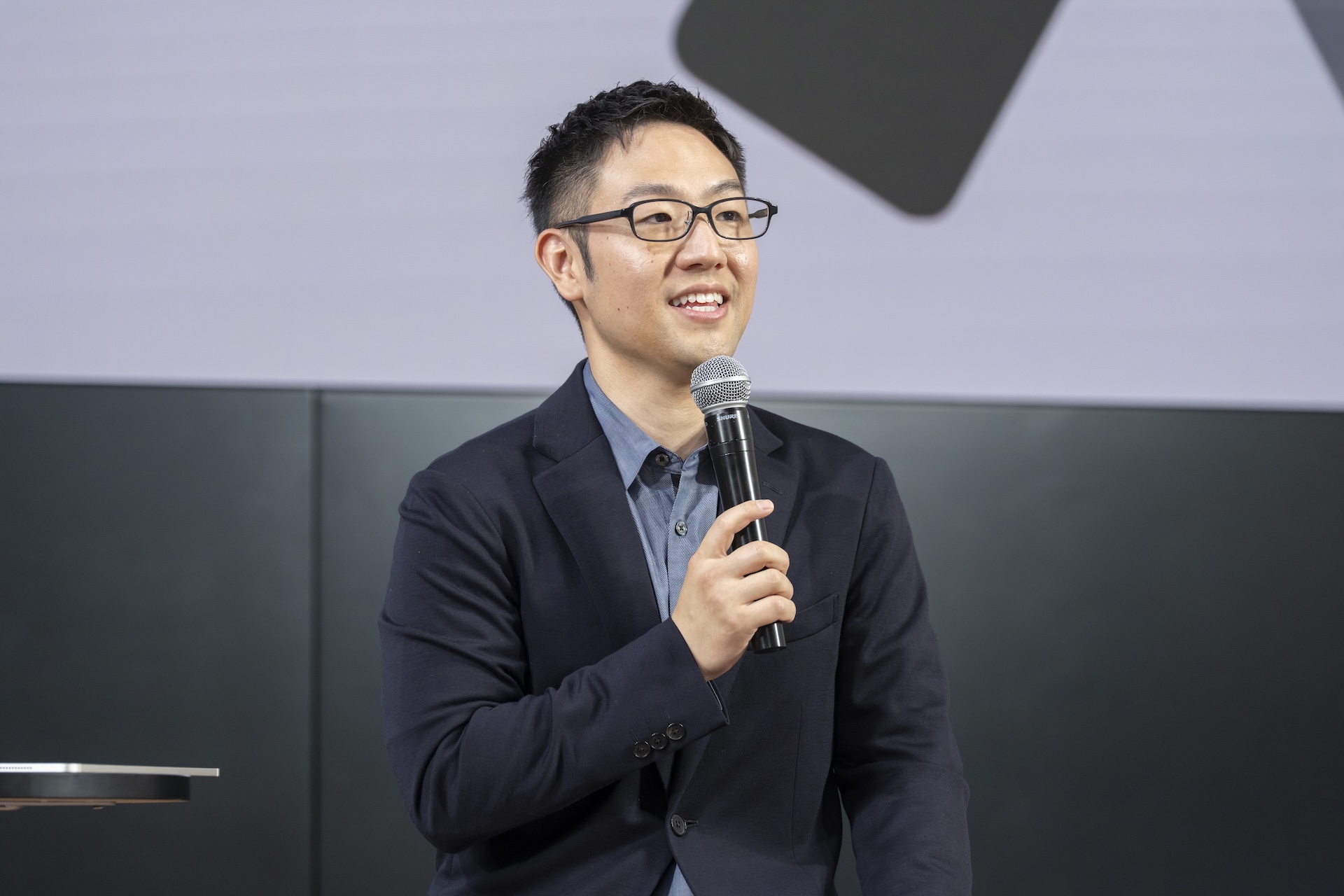
Throughout the week, John Absmeier, CTO, and other technology leaders from across domains shared similar perspectives around the importance of collaboration — how a goal as ambitious as zero traffic accidents cannot be achieved by any one company alone. It takes Toyota’s long-standing manufacturing expertise. Our software development capabilities. And bold new ideas from diverse partners.
It’s when those and more come together that meaningful new possibilities start to emerge. This is, after all, what we mean by the very word: Kakezan.
Technologies turning vision into reality
At the event, we introduced several AI-based technologies, both launched and in development, aimed at improving safety and peace of mind. Many go beyond the boundaries of vehicles or any single industry.
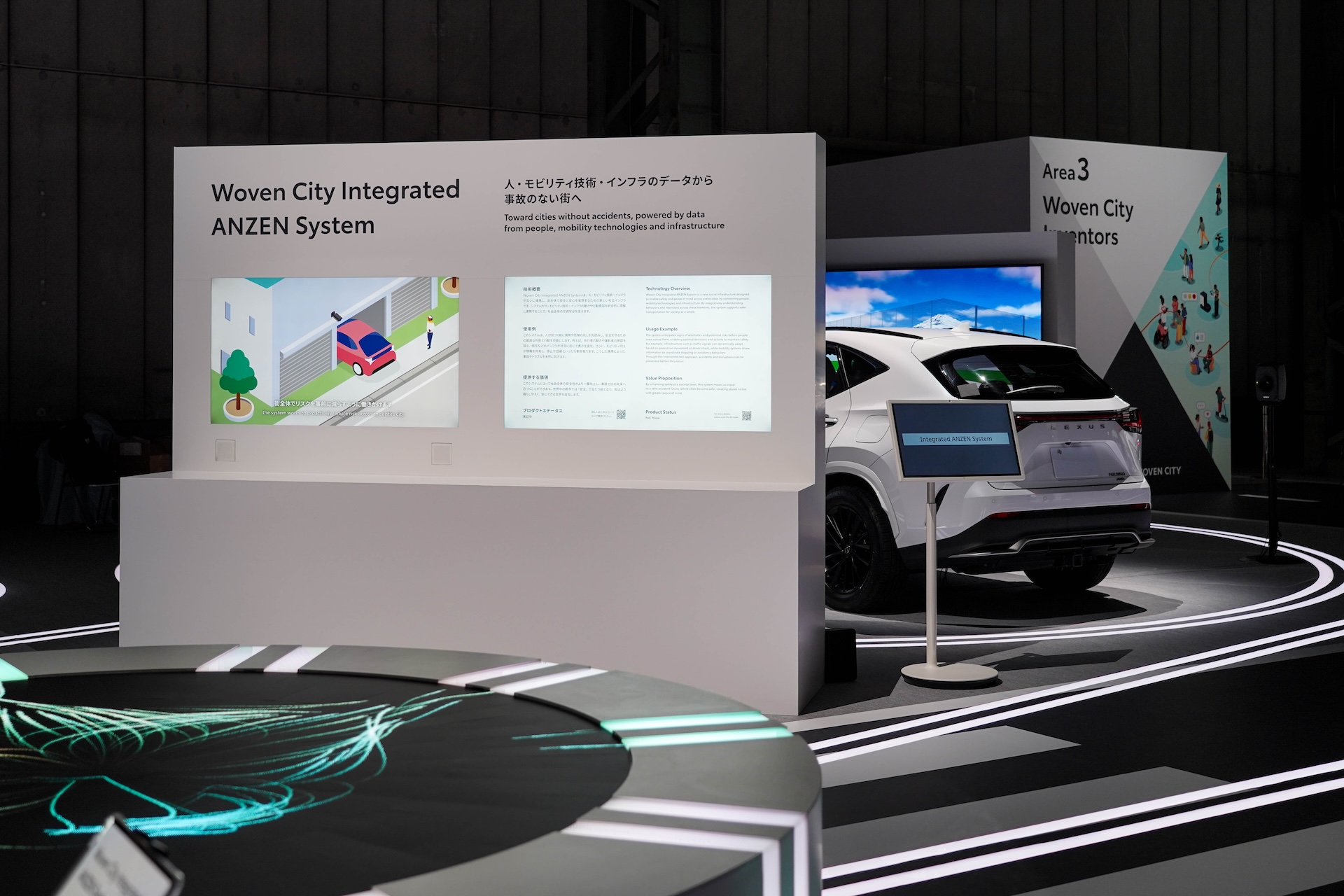
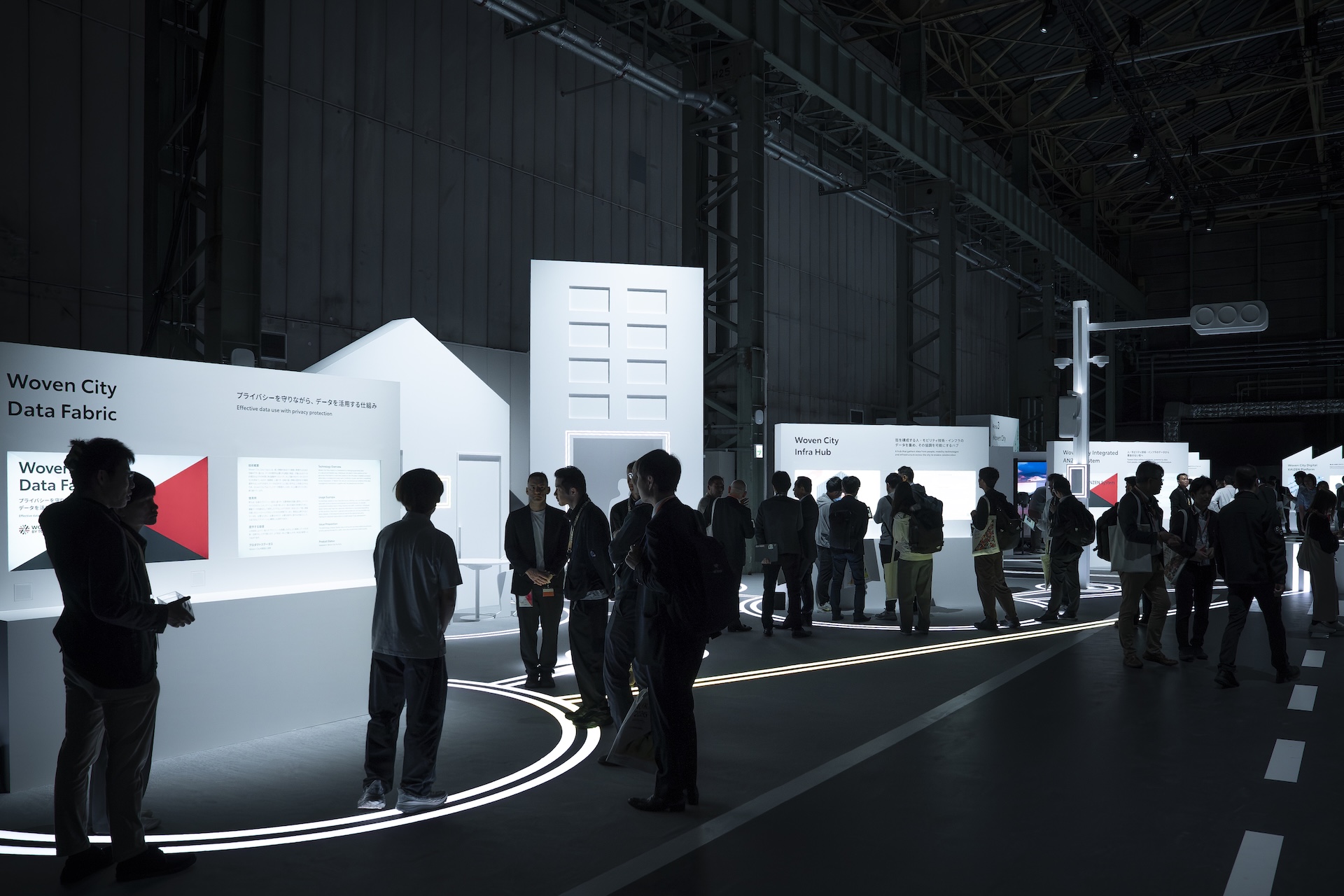
One that drew particular attention was the Woven City AI Vision Engine, used within the Woven City Integrated ANZEN System. At a high level, Woven City AI Vision Engine is a world-leading*2 vision-language model that can understand what’s happening in the city in real time and connect that understanding to decision-making. It works alongside Woven City Behavior AI, which looks at patterns in how people move and act, and Woven City Drive Sync Assist, which helps guide driving based on driver needs and the surrounding environment. Together, these systems are designed to work as one, supporting safer and more responsive interactions between people, vehicles and infrastructure.
Outside the ANZEN system, our AI Vision Engine has broad potential across a range of applications and is already being used by partner Inventors such as UCC Japan Co., Ltd.
Toyoda described AI’s role in Woven City as “not just a piece of technology, but something that understands what is happening in the city and supports people by anticipating their needs.”
Other Kakezan-driven technologies unveiled at KAKEZAN 2026 include:
Woven City Infra Hub
The Woven City Infra Hub is an integrated platform that brings together diverse data from across the city (people, infrastructure and mobility technology data) so everything can function as a single system. Developed and operated in-house, it absorbs differences across data formats and control systems, regardless of standards or manufacturers. This enables vehicles, robots and on-site facilities to work together more seamlessly, while supporting the needs of diverse co-creation projects.The Woven City Data Fabric is a framework for managing personal data in a secure and flexible way — respecting privacy while enabling meaningful use. Individuals can grant or deny access to their personal information in real time, based on why the data is needed, what data is involved and under what conditions, and who is requesting access. By upholding individual privacy and simultaneously enabling flexible data sharing and use, the system supports the realization of a safer, more secure and more livable society.
Woven City Digital KAIZEN Platform
The Woven City Digital KAIZEN Platform enables the collection and analysis of operational data, and provides an environment where a range of solutions can be simulated and validated digitally before being introduced into the real world. This helps accelerate Kaizen across manufacturing, logistics and other mobility domains.
The Woven City xEV-VPP is a system that leverages fleets of EV batteries as energy resources. Parked EVs are treated as large-scale storage, with their energy managed for optimal use. This allows facilities such as parking areas to function as new forms of energy infrastructure, contributing to decarbonization across society while supporting companies in advancing their ESG goals. It enables a more sustainable and resilient approach to energy use.
The Woven City Robot Platform is a platform designed to accelerate the development of robotics services and technologies. It combines development environments such as simulation software, a range of hardware for testing different ideas, systems that enable integration with infrastructure such as automatic doors and elevators, and a total robotics system that supports the movement of goods and everyday life.
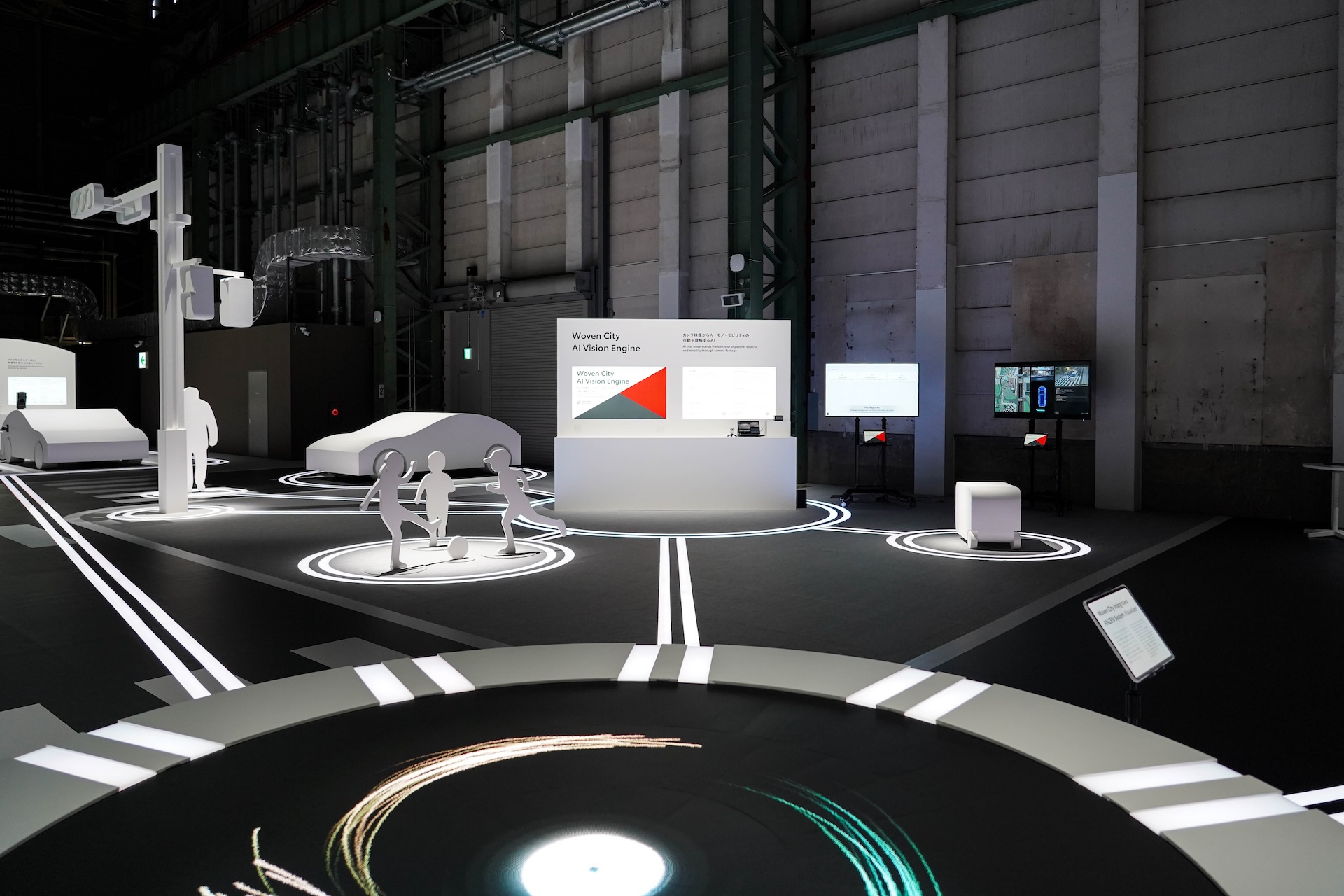
Alongside Woven City technologies, we also shared progress across other key development areas. This included how Arene is supporting Toyota’s shift toward software-defined vehicles through standardized, repeatable testing and improved software quality control, and how, in automated driving, we continue to build a single, production-grade stack that has the potential to scale from driver assistance to fully automated driving through real-world data and a proprietary active learning loop.
Insights from subject matter experts
Throughout the week, we also held a series of Tech Talks. These sessions went a layer deeper, looking at the complex workings behind what was on display, and how teams are approaching some of the more intricate challenges involved. Our experts gave a sense of the culture, mindset and ways of working needed to make their innovation a success.
You can find links to each session below.
Woven City Data Fabric | Rikkie Tarczaly, Senior Staff Engineer, Head of Data
Woven City Digital KAIZEN Platform | Tomoyuki Kaga, Senior Staff Engineer and Guillaume De Lestrange, Senior Engineer, Digital Twin Platform
CitySim: Woven City Simulation | Narimasa Watanabe, Staff Engineer, Behavior AI
Context-aware IoT platform for device-rich environments, such as Woven City | Tetsunoshin Anzai, Senior Manager, Agora IoT
The SDV Era: A New Industrial Paradigm | Jean-François Campeau, VP and Head of Arene
Machine learning in Autonomy | Dushyant Wadivkar, VP, Head of Global AD/ADAS
Future of mobility | Michiko Kato, Chief Investment Officer and Partner, Woven Capital / CEO and Representative Director, Toyota Invention Partners Co., Ltd. and Kenji Goho, CFO, WHILL, Inc.
A community beginning to take shape
Another key highlight of KAKEZAN 2026 was the dedicated space to introduce our Inventor partners.
More than 20 Inventors shared their ongoing work across a wide range of fields — from AI and digital technologies, autonomous mobility, personalized living environments and optimized nutrition, to areas such as entertainment, education and community building. They spoke about what they’re building toward, and how they’re collaborating with each other, Toyota Group companies, and us here at Woven by Toyota.
One exhibit that stood out was Akio Toyoda AI. As Master Weaver of Woven City, Akio Toyoda contributed to the model’s development, reflecting his approach to leadership and decision-making while encouraging purpose-driven collaboration across the Toyota Group. Demonstrations every 30 minutes drew interest from visitors eager to engage with him and hear his perspective.
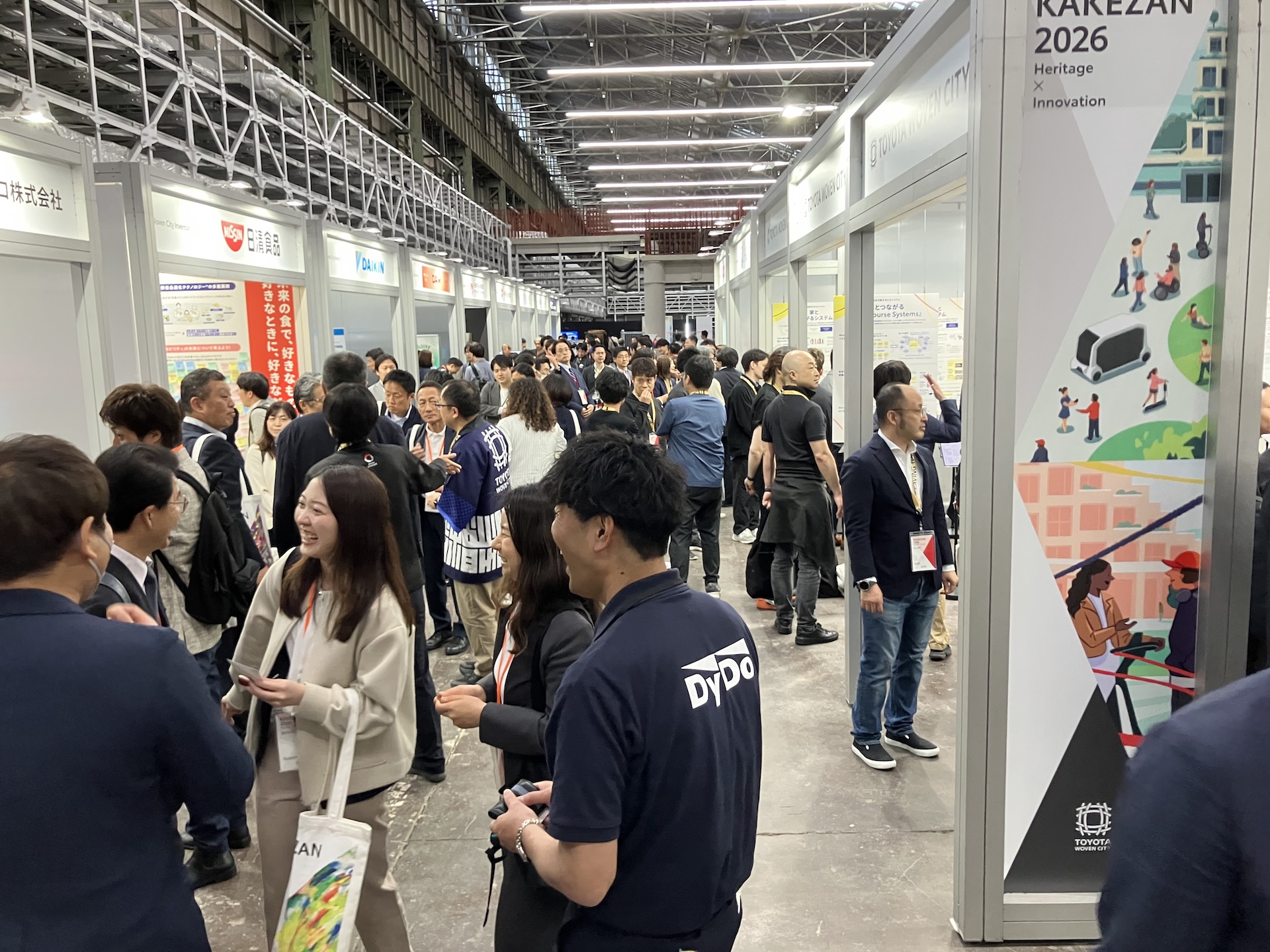
Alongside these exhibits, the Toyota Woven City Challenge reached its final pitch, with a panel of judges selecting four winning teams that are scheduled to become official Woven City Inventors. This included Aerial Base, Aillis, JOYCLE and PUBLIC Technologies.

Across the site, alongside the Inventors and startups, were other elements that felt unique to Woven City. These included a hands-on experience with Sakichi Toyoda’s original wooden loom, retail and beverage services run using e-Palette, and street art created by a Woven by Toyota employee.
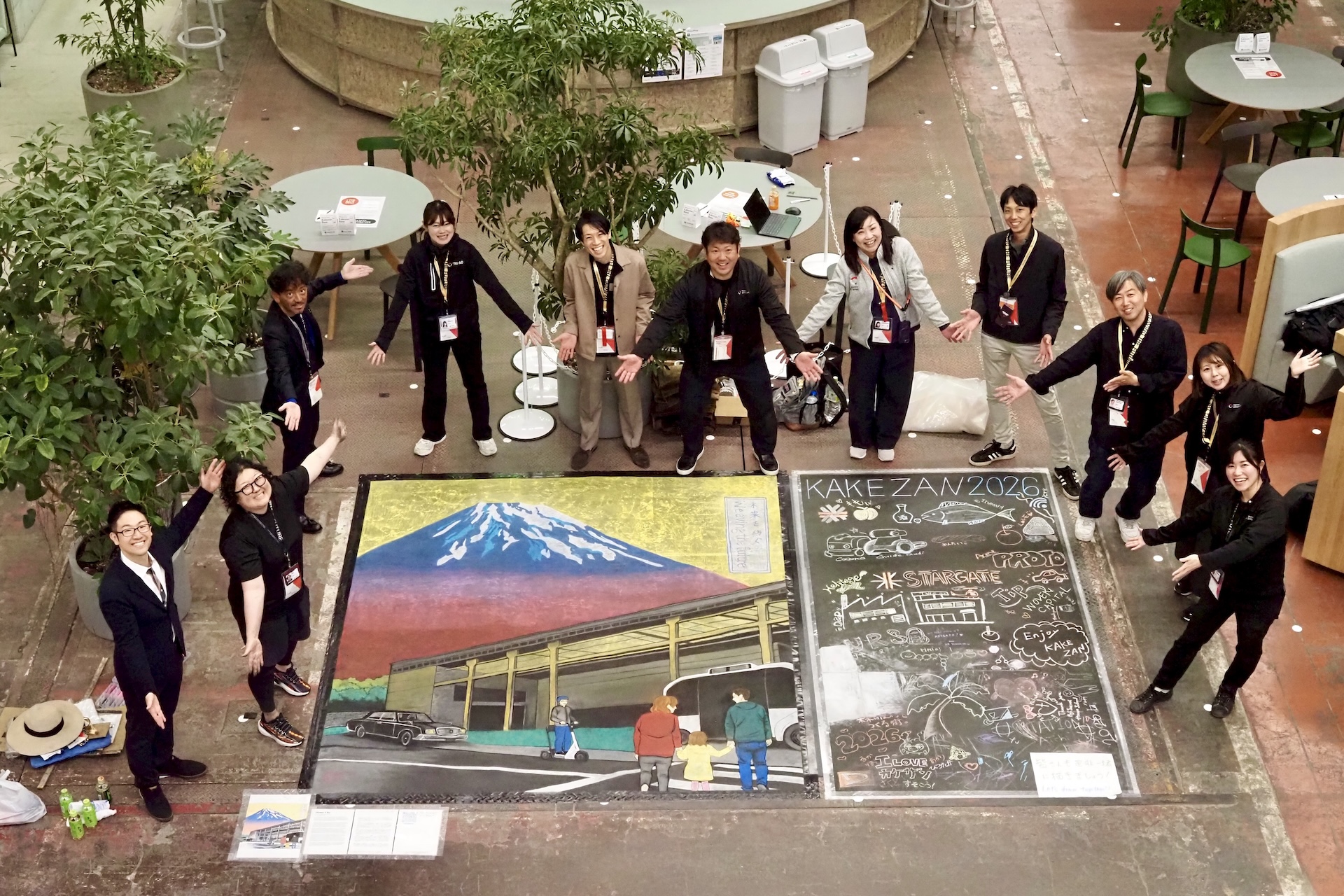
Taken together, these experiences and moments gave a fuller picture of the kind of creative community space the Inventor Garage is already starting to become.
Just the beginning
Kakezan, meaning “multiplication” in Japanese, is our approach to creating solutions with greater impact for society by bringing together diverse strengths across industries.
To realize that, we need to form connections, build relationships, and create spaces where ideas can be shared openly and developed together — unlocking new opportunities that empower people first and foremost, and move us closer to a connected future of mobility with zero traffic accidents and enhanced well-being for all.
That’s what KAKEZAN 2026 was about. And it’s only the beginning.
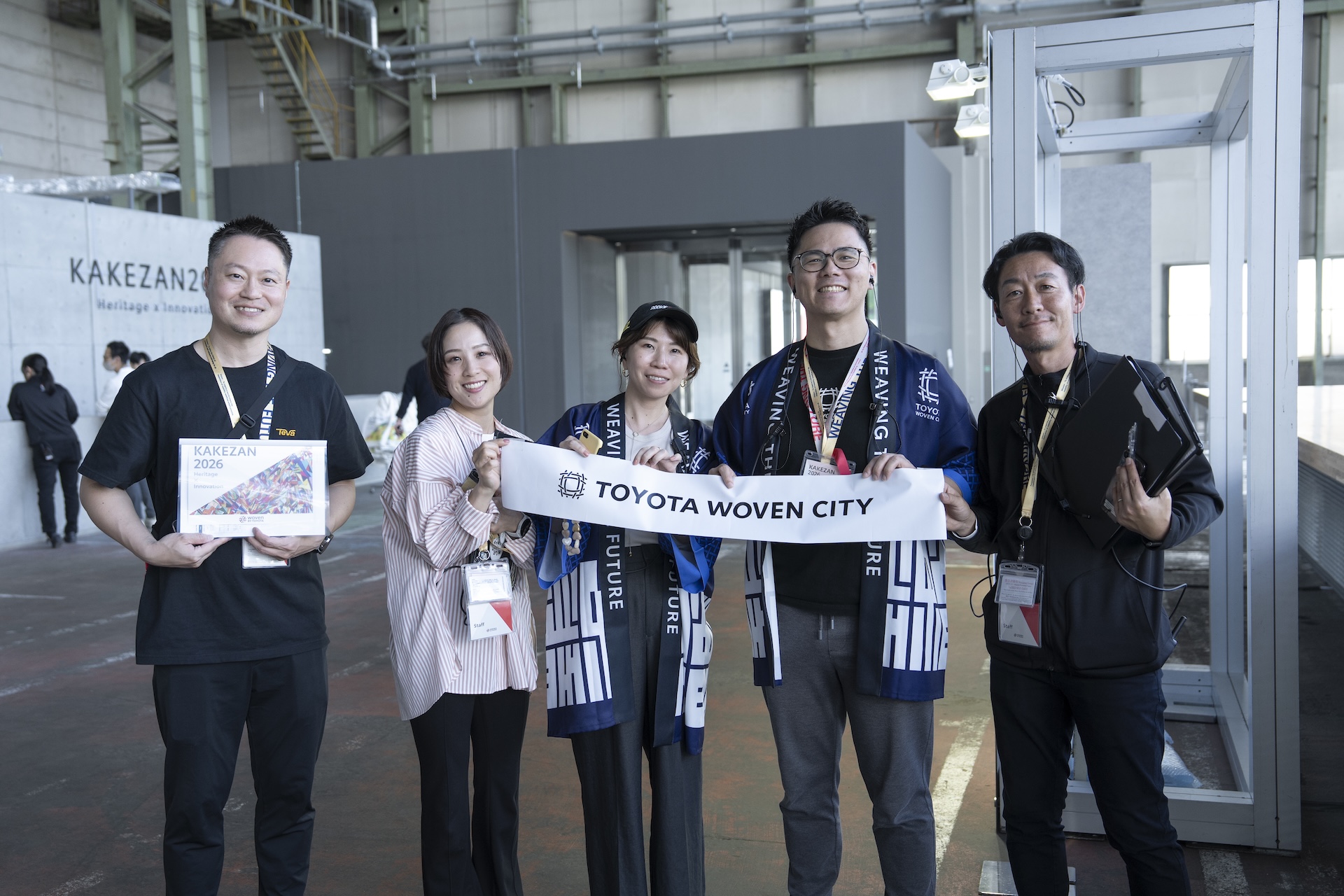
We’re looking forward to taking the next steps together toward the next KAKEZAN event, and beyond.
We’ll continue adding new Tech Talk videos in the coming weeks. To be notified when they become available, follow us on LinkedIn.
To receive future news and updates from Woven by Toyota directly in your inbox, you can subscribe here.
Thank you again to everyone who joined us.
Note*1: Monozukuri, meaning “the art of making things” in Japanese, refers to Toyota’s spirit of craftsmanship and dedication to manufacturing continuously better products for people.
Note*2: According to the MVBench Leaderboard, a benchmark for evaluating video-based AI comprehension and analysis.